
Dehydration Symptoms: Dehydration happens when your body loses more fluid than it takes in. It can happen in any season, but the risk becomes higher during summer, heatwaves, heavy sweating, fever, vomiting, or loose motions.
Water is important for body temperature, digestion, blood circulation, energy, and normal body function. When the body does not have enough water and salts, you may feel tired, dizzy, weak, or confused.
Mild dehydration can often improve with fluids, but severe dehydration can be serious and may need urgent medical treatment. Mayo Clinic also notes that mild to moderate dehydration can usually be reversed by drinking more fluids, while severe dehydration needs immediate medical care.
In this article, you will learn the common dehydration symptoms, early signs, severe warning signs, causes, what to drink, prevention tips, and when to see a doctor.
Quick Answer
Common dehydration symptoms include thirst, dry mouth, headache, tiredness, dizziness, dark yellow urine, less urination, muscle cramps, and weakness.
Severe dehydration symptoms may include confusion, fainting, very little or no urine, fast heartbeat, rapid breathing, sunken eyes, severe weakness, and extreme sleepiness. If these symptoms appear, medical help is needed.
What Is Dehydration?
Dehydration means your body does not have enough fluid to work properly. It can happen when:
- You do not drink enough fluids
- You sweat too much
- You have vomiting
- You have loose motions or diarrhoea
- You have fever
- You spend too much time in hot weather
The body also loses salts and minerals during sweating, vomiting, and diarrhoea. That is why plain water may not always be enough in some situations. ORS can help when the body loses both water and salts.
Early Dehydration Symptoms
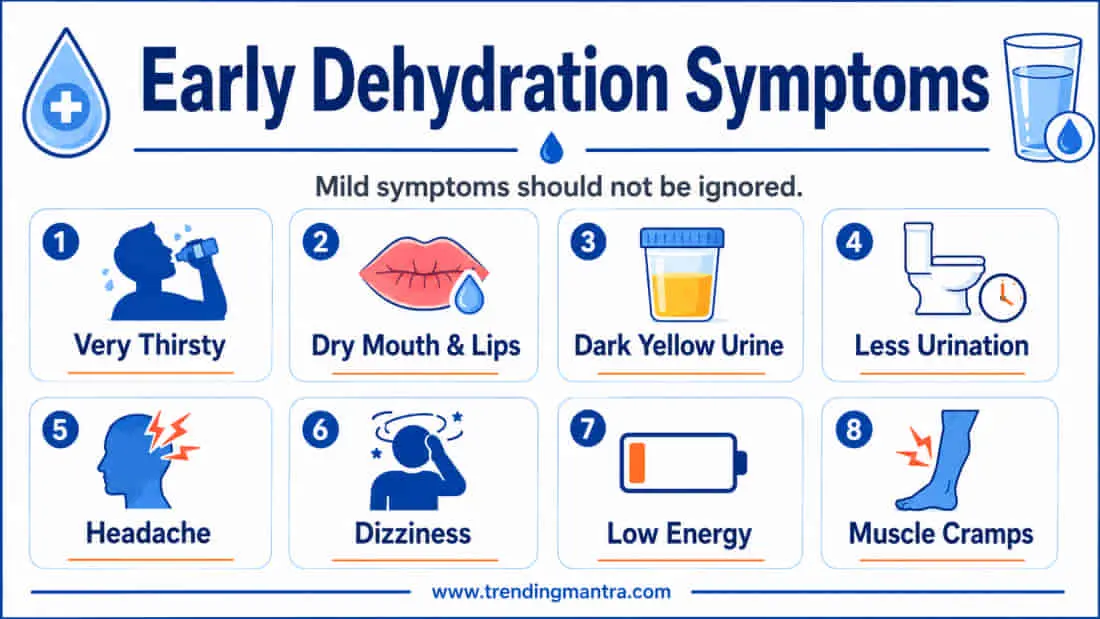
Early dehydration symptoms can be mild, but they should not be ignored.
1. Feeling Very Thirsty
Thirst is one of the first signs that your body needs fluids. If you feel very thirsty, drink water slowly and regularly.
2. Dry Mouth and Dry Lips
Dry mouth, dry lips, and sticky saliva can be signs that your body needs more fluids.
3. Dark Yellow Urine
Urine color can tell you a lot. Dark yellow urine may be a sign that you are not drinking enough water.
4. Less Urination
If you are urinating less than usual, it may be a sign of dehydration.
5. Headache
Dehydration can cause headache or make an existing headache worse.
6. Dizziness
If you feel dizzy, lightheaded, or weak, dehydration may be one possible reason.
7. Tiredness and Low Energy
When the body does not have enough fluids, you may feel tired, lazy, or low in energy.
8. Muscle Cramps
Heavy sweating may lead to loss of water and salts. This may cause muscle cramps in some people.
NHS lists symptoms such as thirst, dark yellow strong-smelling urine, peeing less often, dizziness, tiredness, and dry mouth as signs of dehydration.
Severe Dehydration Symptoms
Severe dehydration can be dangerous. It may need urgent medical care.
Watch for these warning signs:
- Confusion
- Fainting
- Very fast heartbeat
- Rapid breathing
- Very little or no urine
- Extreme weakness
- Sunken eyes
- Very dry mouth and tongue
- Cold hands or feet
- Unusual sleepiness
- Difficulty staying awake
NHS says fast breathing, fast heart rate, confusion, disorientation, and not peeing all day can be signs of serious dehydration that need urgent help.
Common Causes of Dehydration
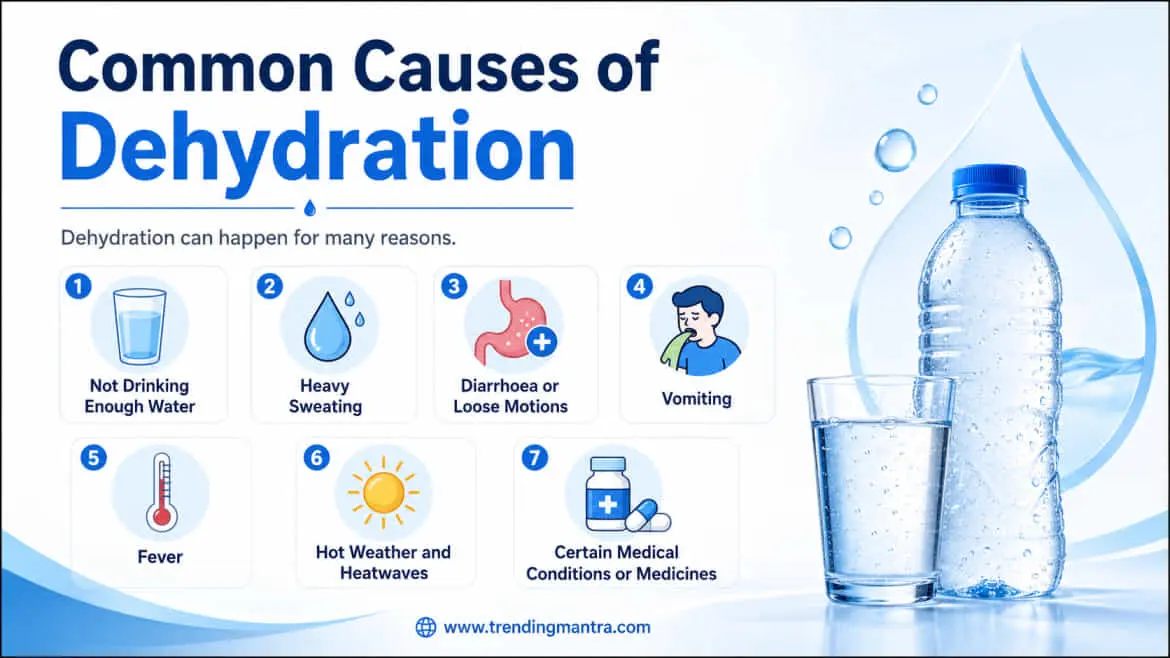
Dehydration can happen for many reasons.
1. Not Drinking Enough Water
This is one of the most common causes. Many people drink less water during busy work, travel, school, or outdoor activity.
2. Heavy Sweating
Sweating increases during summer, exercise, outdoor work, and heatwaves. If lost fluids are not replaced, dehydration can happen.
3. Diarrhoea or Loose Motions
Loose motions can cause quick loss of water and salts. This can be risky, especially for children and elderly people.
4. Vomiting
Vomiting can make it hard to keep fluids inside the body. It can also cause fluid and electrolyte loss.
5. Fever
Fever can increase sweating and fluid loss.
6. Hot Weather and Heatwaves
Hot weather increases the body’s need for fluids. People who work outside are at higher risk.
7. Certain Medical Conditions or Medicines
Some health conditions and medicines can increase urination or fluid loss. People with diabetes, kidney problems, heart disease, or those taking regular medicines should be extra careful.
Dehydration During Summer and Heatwaves
During summer, dehydration risk becomes higher because the body sweats more. In heatwaves, the risk becomes even more serious.
You may be at higher risk if you:
- Work outdoors
- Travel in the afternoon heat
- Exercise in hot weather
- Drink too much tea, coffee, or alcohol
- Eat very salty or spicy food
- Do not carry water outside
- Ignore thirst
During hot weather, CDC advises people to drink fluids, carry a water bottle, and limit sugary, caffeinated, and alcoholic drinks
Internal Link Suggestion:
Read also: Heatwave Diet: What to Eat and Avoid During Summer Heat
Dehydration in Children
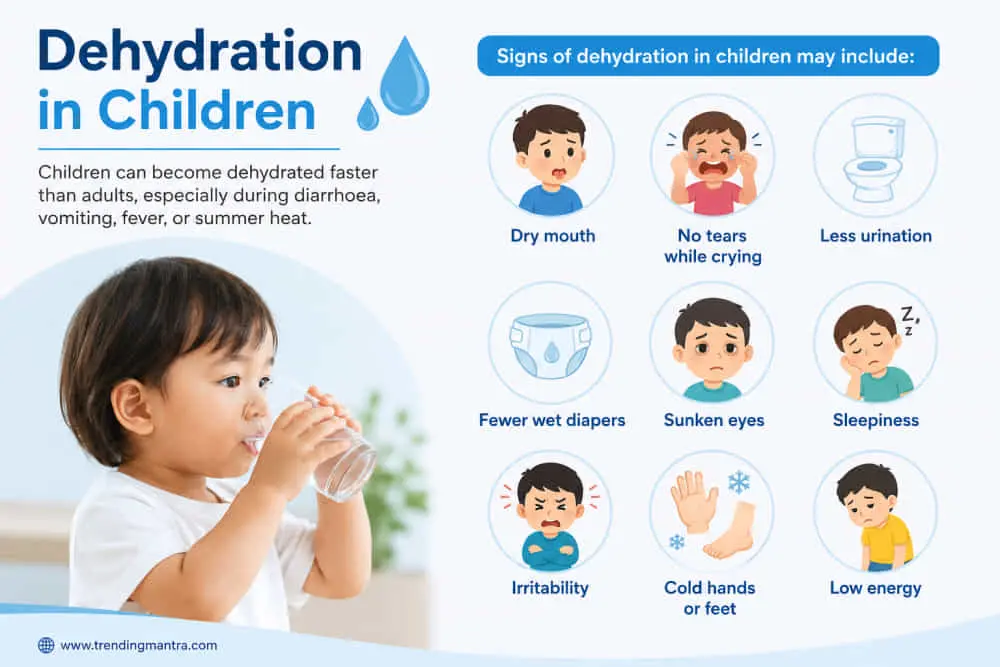
Children can become dehydrated faster than adults, especially during diarrhoea, vomiting, fever, or summer heat.
| Signs of Dehydration in Children |
|---|
| Dry mouth |
| No tears while crying |
| Less urination |
| Fewer wet diapers |
| Sunken eyes |
| Sleepiness |
| Irritability |
| Cold hands or feet |
| Low energy |
If a baby or child has repeated vomiting, loose motions, no urine for many hours, unusual sleepiness, or looks very weak, consult a doctor quickly.
Dehydration in Elderly People
Elderly people are also at higher risk because they may feel less thirsty, drink less water, or take medicines that affect fluid balance.
Older adults should drink fluids regularly and should not wait until they feel very thirsty.
⚠️ Extra Care Is Needed
Some people may become dehydrated faster or may need medical advice sooner. Extra care is needed if they have:
🩸 Diabetes
People with diabetes should be more careful during heat, fever, vomiting, or loose motions.
🫘 Kidney Disease
Kidney patients should follow their doctor’s fluid advice and avoid guessing fluid intake.
❤️ Heart Disease
People with heart disease may need special care because fluid balance is important.
🩺 Blood Pressure Problems
High or low blood pressure can become worse with dehydration or excess fluid loss.
🌡️ Fever
Fever can increase sweating and fluid loss, so hydration needs extra attention.
🚽 Loose Motions
Loose motions can quickly reduce water and salts from the body.
🤢 Vomiting
Repeated vomiting can make it difficult to keep fluids inside the body.
🧠 Confusion
Confusion can be a warning sign of serious dehydration or illness.
😓 Weakness
Severe weakness, dizziness, or unusual tiredness should not be ignored.
Important: If a person has diabetes, kidney disease, heart disease, blood pressure problems, repeated vomiting, confusion, severe weakness, or very little urination, seek medical help quickly.
What to Drink During Dehydration
What you should drink depends on how serious the dehydration is.
For Mild Thirst
- Plain water
- Lemon water
- Buttermilk
- Coconut water in moderation
- Water-rich fruits
For Fluid Loss
If dehydration is due to loose motions, vomiting, heavy sweating, or heat exhaustion, ORS may be useful.
For Serious Symptoms
If there is confusion, fainting, very little urine, severe weakness, or repeated vomiting, seek medical help.
ORS for Dehydration
ORS stands for Oral Rehydration Solution. It helps replace lost water and salts. ORS is especially useful when dehydration happens due to diarrhoea, vomiting, or heavy fluid loss.
CDC says many people can be rehydrated by drinking ORS made with prepackaged powder mixed with treated or boiled water.
Always prepare ORS exactly as written on the packet:
Use full ORS packet + exact amount of clean water.
Do not add extra sugar, salt, juice, lemon, soda, or honey.
Foods and Drinks That May Help
During mild dehydration or summer heat, you can include water-rich foods and light drinks.
Good options may include:
- Plain water
- Coconut water in moderation
- Buttermilk
- Lemon water
- Watermelon
- Cucumber
- Muskmelon
- Orange
- Curd
- Light dal-rice
- Khichdi
- Soups
- ORS when needed
Internal Link Suggestion:
Read also: Best Summer Drinks in India to Stay Hydrated Naturally
Read also: Coconut Water Benefits in Summer
What to Avoid During Dehydration
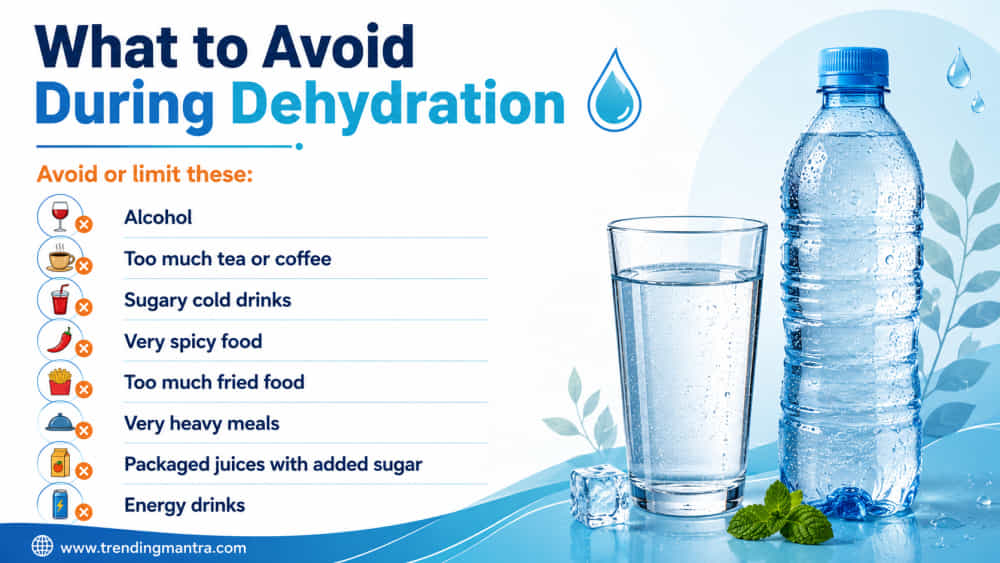
Avoid or limit these:
- Alcohol
- Too much tea or coffee
- Sugary cold drinks
- Very spicy food
- Too much fried food
- Very heavy meals
- Packaged juices with added sugar
- Energy drinks
These may not be good choices when your body needs simple fluids and rest.
When to See a Doctor Immediately
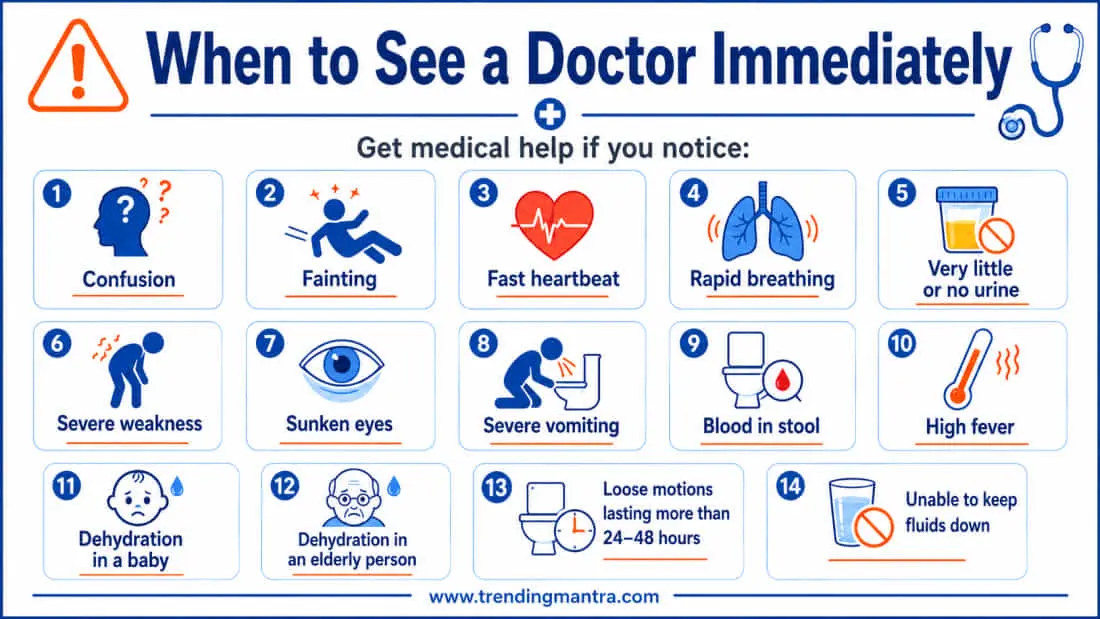
Get medical help if you notice:
- Confusion
- Fainting
- Fast heartbeat
- Rapid breathing
- Very little or no urine
- Severe weakness
- Sunken eyes
- Severe vomiting
- Blood in stool
- High fever
- Dehydration in a baby
- Dehydration in elderly person
- Loose motions lasting more than 24–48 hours
- Unable to keep fluids down
Mayo Clinic says severe dehydration needs immediate medical treatment, and sudden severe diarrhoea can cause a large loss of water and electrolytes quickly.
⚠️ Common Mistakes to Avoid
Small mistakes can make dehydration worse. Keep these points in mind.
❌ Mistake 1: Waiting Until You Feel Very Thirsty
Do not wait for strong thirst. Drink fluids regularly throughout the day.
❌ Mistake 2: Ignoring Dark Urine
Dark yellow urine can be an early sign of dehydration and should not be ignored.
❌ Mistake 3: Drinking Only Cold Drinks
Sugary cold drinks are not a healthy replacement for water or ORS.
❌ Mistake 4: Using ORS Incorrectly
Do not guess the water amount. Always follow the packet instructions carefully.
❌ Mistake 5: Giving Only Water During Loose Motions
During diarrhoea, the body loses water and salts. ORS may be more useful than plain water in many cases.
❌ Mistake 6: Ignoring Children and Elderly People
Children and elderly people can become dehydrated faster and may need quick medical help.
Important: If dehydration symptoms are severe, or if a child or elderly person looks weak, confused, very sleepy, or unable to drink, seek medical help quickly.
✅ Simple Prevention Tips
You can reduce dehydration risk by following these simple steps:
💧 Drink Water Regularly
Drink water throughout the day instead of waiting until you feel very thirsty.
🧴 Carry a Water Bottle
Always carry a water bottle when going outside, especially in hot weather.
☀️ Avoid Extreme Afternoon Heat
Try to avoid going out during peak afternoon heat whenever possible.
🍉 Eat Water-Rich Fruits
Include fruits like watermelon, cucumber, oranges, and muskmelon in your diet.
🥛 Choose Healthy Fluids
Drink buttermilk, lemon water, or coconut water in moderation to stay hydrated.
🧂 Use ORS When Needed
Use ORS when there is heavy sweating, loose motions, vomiting, or signs of dehydration.
🚫 Avoid Alcohol During Heatwaves
Alcohol can increase dehydration risk, especially during very hot weather.
🥤 Limit Sugary Drinks
Avoid too many sugary cold drinks, packaged juices, and energy drinks.
👕 Wear Loose Cotton Clothes
Loose, light-colored cotton clothes can help your body stay cooler.
🌳 Rest in Shade or Cool Places
Take breaks in shaded or cool areas, especially when spending time outside.
🚽 Watch Urine Color
Dark yellow urine may be an early warning sign that your body needs more fluids.
👶 Take Extra Care of Children and Elderly People
Children and elderly people can become dehydrated faster, so monitor them carefully.
Important: If someone has severe weakness, confusion, very little urination, repeated vomiting, or cannot drink properly, seek medical help quickly.
FAQs
1. What are the first signs of dehydration?
The first signs may include thirst, dry mouth, headache, tiredness, dark yellow urine, less urination, and dizziness.
2. What are severe dehydration symptoms?
Severe symptoms may include confusion, fainting, fast heartbeat, rapid breathing, very little urine, sunken eyes, and extreme weakness.
3. What causes dehydration?
Common causes include not drinking enough water, heavy sweating, vomiting, diarrhoea, fever, heatwaves, and some medical conditions.
4. Is ORS good for dehydration?
Yes, ORS may help replace lost water and salts, especially during loose motions, vomiting, heavy sweating, or dehydration risk.
5. Can I drink only water during dehydration?
For mild thirst, water may be enough. But if dehydration happens due to vomiting, loose motions, or heavy sweating, ORS may be more useful.
6. What should I drink for dehydration in summer?
You can drink water, lemon water, buttermilk, coconut water in moderation, and ORS when needed.
7. When should I see a doctor for dehydration?
See a doctor immediately if there is confusion, fainting, very little urine, fast heartbeat, severe weakness, repeated vomiting, blood in stool, or dehydration in a baby or elderly person.
8. Can dehydration cause headache?
Yes, dehydration can cause headache or make headache worse.
9. Can dehydration cause dark urine?
Yes, dark yellow urine is a common sign that your body may need more fluids.
10. Who is at higher risk of dehydration?
Children, elderly people, pregnant women, outdoor workers, athletes, and people with diabetes, kidney disease, heart disease, fever, diarrhoea, or vomiting are at higher risk.
Conclusion
Dehydration symptoms should not be ignored, especially during summer and heatwaves. Early signs include thirst, dry mouth, dark urine, headache, tiredness, weakness, and dizziness. Severe signs like confusion, fainting, very little urine, and fast heartbeat need urgent medical help.
For normal hydration, water is the most important drink. During fluid loss from vomiting, loose motions, heavy sweating, or heat exposure, ORS may help replace lost water and salts.
Disclaimer
This article is for informational purposes only. It is not medical advice. Please consult a doctor or qualified health expert before following any health-related tips, especially if you have a medical condition, kidney problem, heart disease, diabetes, pregnancy, dehydration symptoms, fever, vomiting, diarrhoea, or are taking regular medicines.
—————————–
Read also: Heatwave Diet: What to Eat and Avoid During Summer Heat
Read also: ORS Benefits: When and How to Drink ORS Safely
Read also: Best Summer Drinks in India to Stay Hydrated Naturally
Read also: Coconut Water Benefits in Summer

Comments are closed.