

Coconut water benefits in summer: Coconut water is one of the most popular summer drinks in India. During hot weather, many people prefer coconut water because it feels light, refreshing, and easy to drink. It is also a better choice than many sugary cold drinks.
In summer, the body loses water and salts through sweat. This can make you feel tired, thirsty, weak, or dehydrated. Coconut water may help support hydration because it contains water and natural electrolytes such as potassium, magnesium, calcium, and small amounts of sodium. Health sources also describe coconut water as a hydrating drink with a high water content and important electrolytes.
However, coconut water is not perfect for everyone. People with kidney problems, diabetes, high potassium levels, or those taking certain medicines should be careful and ask a doctor before drinking it regularly.
In this article, you will learn the main coconut water benefits in summer, the best time to drink it, how much to drink, possible side effects, and who should avoid it.
Quick Answer
Coconut water may help support hydration during summer because it contains water and natural electrolytes. It can be a refreshing drink after sweating, outdoor work, or light exercise. The best time to drink coconut water is usually morning or afternoon.
But coconut water should not be treated as a cure for any disease. People with kidney problems, diabetes, high potassium levels, or those taking regular medicines should consult a doctor before drinking it daily.
What Is Coconut Water?
Coconut water is the clear liquid found inside young green coconuts. It is different from coconut milk. Coconut milk is made from coconut flesh, while coconut water is naturally present inside the coconut.
Coconut water is commonly used as a refreshing drink in tropical countries. It is light, mildly sweet, and naturally cooling in taste. Britannica explains that coconut water is the liquid of the coconut fruit and is used in beverages.
Why Coconut Water Is Popular in Summer
Coconut water is popular in summer because it is:
- Light on the stomach
- Naturally refreshing
- Easy to drink
- Lower in sugar than many packaged cold drinks
- A source of electrolytes
- Easily available in many Indian cities
During summer, many people feel low energy because of heat, sweating, and poor hydration. Coconut water can be a useful drink as part of a healthy summer routine.
Coconut Water Nutrition: Important Facts
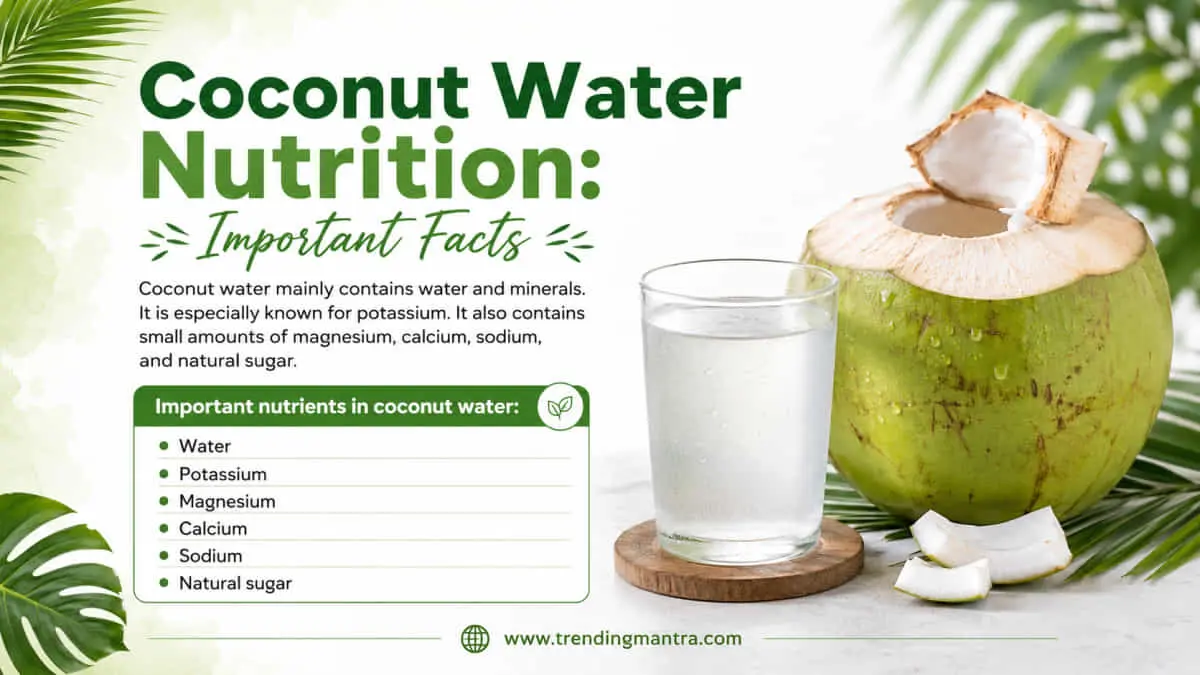
Coconut water mainly contains water and minerals. It is especially known for potassium. It also contains small amounts of magnesium, calcium, sodium, and natural sugar.
Important nutrients in coconut water:
Water
Potassium
Magnesium
Calcium
Sodium
Natural sugar
Because coconut water contains potassium, people with kidney problems or those on potassium-related medicines should be careful. Too much potassium can be risky for some people.
Read also: ORS Benefits: When and How to Drink ORS Safely
Top Coconut Water Benefits in Summer

1. May Support Hydration
One of the biggest coconut water benefits in summer is hydration support. In hot weather, your body loses water through sweating. Coconut water may help replace some fluids and electrolytes.
It can be a better choice than sugary cold drinks because it is lighter and more natural. But plain water should still be your main drink throughout the day.
2. May Help After Sweating
If you sweat a lot due to heat, walking, exercise, or outdoor work, coconut water may feel refreshing. It contains electrolytes that may help support fluid balance in the body.
However, after very intense or long exercise, coconut water may not always be enough because it has lower sodium compared with some sports drinks. For serious dehydration or illness, ORS or medical advice may be needed.
3. Better Than Sugary Cold Drinks
Many people drink cold soda during summer, but sugary drinks are not the best option for hydration. Coconut water can be a better alternative because it is lighter and usually less processed, especially when taken fresh.
Still, avoid packaged coconut water with added sugar. Always check the label if you are buying bottled coconut water.
4. Light on the Stomach
Coconut water is usually light and easy to drink. During summer, when heavy meals and oily food can make you feel uncomfortable, coconut water may be a simple refreshing option.
But if coconut water causes bloating, stomach discomfort, or loose motions for you, reduce the quantity or avoid it.
5. May Support Muscle Function
Coconut water contains potassium and magnesium. These minerals are important for normal muscle and nerve function. This is one reason coconut water is often considered a useful drink after sweating or mild exercise.
But remember, coconut water is not a medicine for muscle cramps. If you get frequent cramps, weakness, or dizziness, consult a doctor.
6. Can Be Part of a Summer Diet
Coconut water fits well into a summer diet. You can drink it with light meals, fruits, salad, curd, buttermilk, and simple home-cooked food.
For a complete summer routine, also include:
- Water
- Lemon water
- Buttermilk
- Watermelon
- Cucumber
- Muskmelon
- Light dal-rice
- Khichdi
- Fresh fruits
Read also: Heatwave Diet: What to Eat and Avoid During Summer Heat
Best Time to Drink Coconut Water
The best time to drink coconut water depends on your routine.
Morning: Morning is a good time for many people. It feels light and refreshing.
Afternoon: Afternoon can also be a good time, especially during summer heat.
After Sweating: You can drink coconut water after sweating, outdoor activity, walking, or light exercise.
Avoid Late Night: Some people may not feel comfortable drinking coconut water late at night, especially if they have acidity, frequent urination, or stomach sensitivity.
How Much Coconut Water Should You Drink?

For most healthy adults, one glass or one small fresh coconut in a day is usually enough. Some people may drink more, but daily quantity depends on health condition, diet, activity level, and weather.
Do not replace normal water with coconut water completely. Plain water should remain your main hydration source.
Read also: Heatwave Diet: What to Eat and Avoid During Summer Heat
Coconut Water vs Lemon Water vs ORS
Many people get confused between coconut water, lemon water, and ORS. All three can be useful, but they are not the same.
| Drink | Best For | Important Note |
|---|---|---|
| Coconut water | Light hydration and electrolytes | Be careful in kidney problems |
| Lemon water | Refreshing summer drink | Avoid too much sugar |
| ORS | Dehydration from fluid loss | Follow packet instructions |
| Plain water | Daily hydration | Most important drink |
Simple Rule:
For normal summer hydration:
Drink plain water, lemon water, buttermilk, and coconut water.
For dehydration signs:
Use ORS as per packet instructions.
For serious symptoms:
Contact a doctor immediately.
Is Coconut Water Good for Weight Loss?
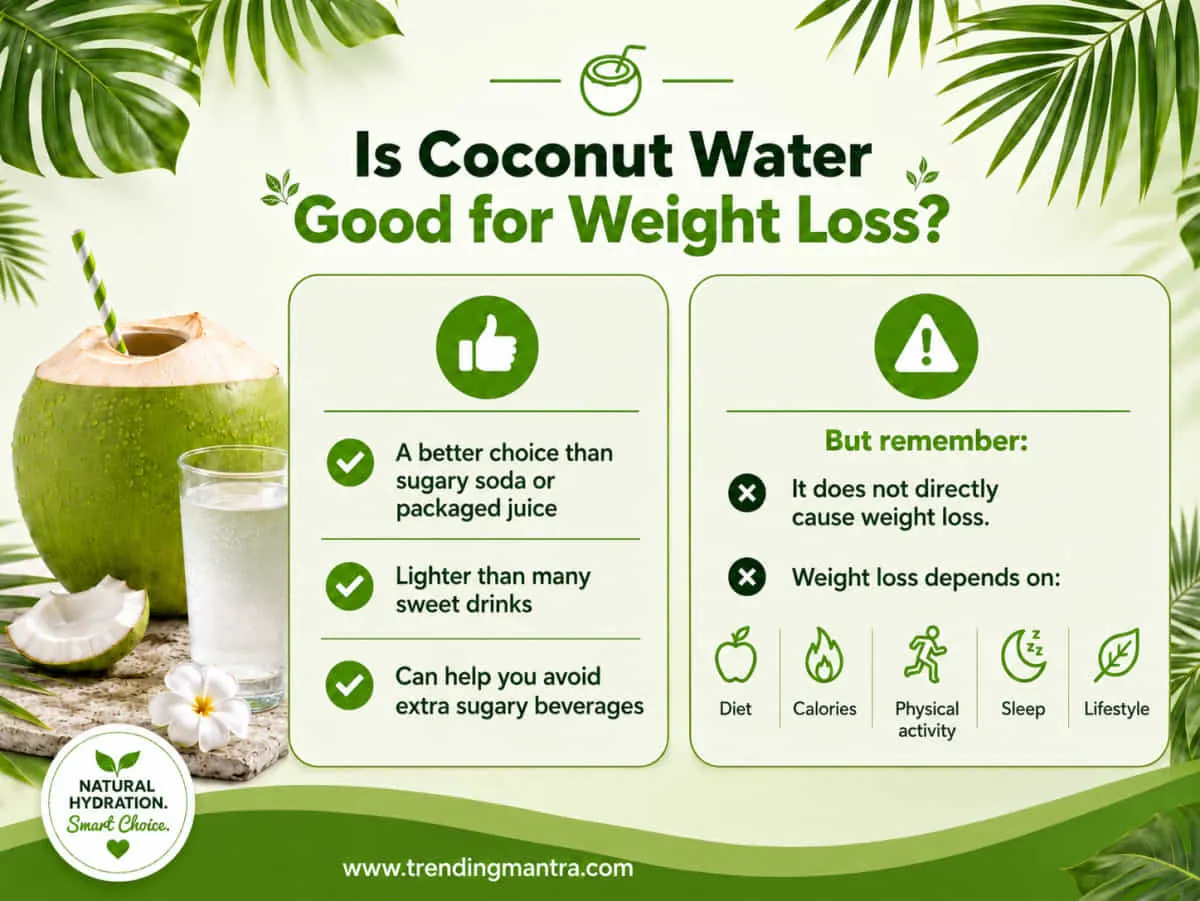
Coconut water may be a better drink than sugary soda or packaged juice if you are trying to manage weight. It is lighter than many sweet drinks and can help you avoid extra sugary beverages.
But coconut water does not directly cause weight loss. Weight loss depends on overall diet, calories, physical activity, sleep, and lifestyle.
Is Coconut Water Good for Skin?
Many people believe coconut water is good for skin because hydration is important for healthy-looking skin. Coconut water may support hydration as part of a balanced diet.
But it does not magically remove pimples, dark spots, or skin problems. Skin health depends on many things, including diet, sleep, skincare, hormones, water intake, and medical conditions.
If you have acne or skin allergies, consult a dermatologist.
Is Coconut Water Good for Diabetes?
People with diabetes should be careful with coconut water. Coconut water contains natural sugar and potassium. Some people may tolerate it in small quantity, while others may need to avoid or limit it.
If you have diabetes, ask your doctor or dietitian before drinking coconut water regularly. Do not assume it is always safe just because it is natural.
Possible Side Effects of Coconut Water
Coconut water is generally safe for many healthy people when taken in moderate quantity. But too much coconut water may cause problems for some people.
Possible side effects may include:
- Bloating
- Stomach discomfort
- Loose motions in some people
- Increased potassium intake
- Blood sugar concern for some people
- Not suitable for some kidney patients
People with kidney disease should be especially careful because coconut water is high in potassium. Health sources advise people with kidney issues or potassium-related medication concerns to consult healthcare providers before regular intake.
Who Should Avoid or Be Careful?

Some people should be careful before drinking coconut water daily.
1. People With Kidney Problems
Kidneys help control potassium levels in the body. Coconut water is rich in potassium, so people with kidney problems should ask a doctor first.
2. People With Diabetes
Coconut water contains natural sugar. Diabetic patients should check with a doctor or dietitian before regular use.
3. People Taking Regular Medicines
Some medicines can affect potassium levels. If you take blood pressure medicines, kidney medicines, or heart-related medicines, ask your doctor before drinking coconut water daily.
4. People With Stomach Sensitivity
Some people may feel bloating or loose motions after drinking coconut water. If it does not suit your body, avoid it.
5. People on a Restricted Diet
If your doctor has told you to limit fluids, potassium, or sugar, do not drink coconut water without medical advice.
Fresh Coconut Water vs Packaged Coconut Water
Fresh coconut water is usually the better choice when available. Packaged coconut water can also be convenient, but you should check the label.
When buying packaged coconut water, check:
No added sugar
No artificial flavor
No unnecessary preservatives
Low sodium if you are watching salt intake
Expiry date
Proper storage instructions
Avoid coconut water drinks that are loaded with added sugar.
Common Mistakes to Avoid
Mistake 1: Drinking Too Much
Coconut water is healthy for many people, but too much is not always better. One glass is enough for most people.
Mistake 2: Replacing Plain Water
Coconut water should not replace plain water. Keep drinking normal water throughout the day.
Mistake 3: Thinking It Cures Diseases
Coconut water does not cure diabetes, kidney disease, acidity, high blood pressure, or skin problems. It is only a drink that may support hydration.
Mistake 4: Drinking Packaged Coconut Water Without Checking Label
Some packaged coconut water products may contain added sugar. Always read the label.
Mistake 5: Ignoring Medical Conditions
If you have kidney problems, diabetes, heart disease, or take regular medicines, ask a doctor before drinking coconut water daily.
Simple Ways to Use Coconut Water

You can use coconut water in simple ways:
- Drink it fresh
- Add it to smoothies
- Use it after light exercise
- Drink it after outdoor activity
- Pair it with a light summer breakfast
- Use it as part of a summer hydration routine
Avoid adding too much sugar, syrup, or artificial flavors.
FAQs
1. Is coconut water good in summer?
Yes, coconut water can be a good summer drink for many people. It may help support hydration and provides natural electrolytes. But people with kidney problems, diabetes, or medical conditions should ask a doctor first.
2. What is the best time to drink coconut water?
Morning or afternoon is usually a good time. You can also drink it after sweating, walking, outdoor activity, or light exercise.
3. Can I drink coconut water daily?
Many healthy people can drink coconut water in moderate quantity. One glass or one small coconut a day is usually enough. If you have a medical condition, ask your doctor.
4. Is coconut water better than cold drinks?
Coconut water is usually a better choice than sugary cold drinks because it is lighter and contains natural electrolytes. But plain water is still the most important drink.
5. Can coconut water help with dehydration?
Coconut water may support hydration in normal summer heat or after sweating. But for dehydration caused by vomiting, loose motions, or serious fluid loss, ORS or medical advice may be needed.
6. Is coconut water good for weight loss?
Coconut water can be a better replacement for sugary drinks, but it does not directly cause weight loss. Weight loss depends on overall diet and lifestyle.
7. Who should avoid coconut water?
People with kidney problems, high potassium levels, diabetes, or those taking potassium-related medicines should consult a doctor before drinking coconut water regularly.
8. Is packaged coconut water healthy?
Packaged coconut water can be okay if it has no added sugar or artificial ingredients. Always check the label before buying.
9. Can I drink coconut water at night?
Some people can drink it at night, but others may feel stomach discomfort or frequent urination. Morning or afternoon is usually better.
10. Is coconut water the same as coconut milk?
No. Coconut water is the clear liquid inside young coconuts. Coconut milk is made from coconut flesh and is thicker and higher in fat.
Read also: ORS Benefits: When and How to Drink ORS Safely
Read also: Heatwave Diet: What to Eat and Avoid During Summer Heat
Disclaimer
This article is for informational purposes only. It is not medical advice. Please consult a doctor or qualified health expert before following any health-related tips, especially if you have a medical condition, kidney problem, diabetes, heart disease, high potassium level, pregnancy, allergy, or are taking regular medication.


Comments are closed.